



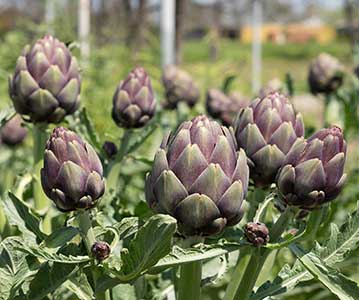
Going pesticide-free can pay off: a study shows that, in some cases, it can lead to higher yields and greater profitability
We humans are strange. Although we know that pesticides and mineral fertilisers can deplete our soils and render them infertile in the medium term, we continue to rely on them. For whatever reason, we act as though we can achieve consistently high yields on precisely these soils. The opposite is often the case. We are deceiving ourselves.
Now, a study spanning over ten years shows that, under controlled conditions, pesticide-free farming – including farming free from organic pesticides – can indeed work very well and that it can even yield higher margins.
April 2026
→ Read the blog article on pan-europa.info
Experimental design
The project comprised nine long-term trials in France, involving five pure arable farming systems and four mixed farming systems. In all variants, pesticides were completely avoided, whilst mineral fertilisers and ploughing were permitted. Key elements included diverse crop rotations, legumes, catch crops and supporting agricultural infrastructure.
Yields
Yields were generally lower than those of conventional systems, though in some cases they were comparable or higher, and were significantly higher than those of organic farming.
Yields were generally lower than in conventional systems, but in some cases were comparable or higher, and were significantly higher than in organic farming. On average, yields in conventional bread wheat cultivation were higher than those in pesticide-free systems, whilst organic farming remained significantly lower.
However, this picture is not uniform: in Auzeville-Tolosane, organically grown wheat achieved higher yields than the conventional variety in one trial year. Pesticide-free durum wheat reached conventional levels, and pesticide-free triticale exceeded these in some years. Yield targets were also achieved in many trials for crops such as rapeseed, sugar beet and potatoes. For sugar beet, actual yields were significantly higher than the expected losses and at a level comparable to conventional regional figures.
Pests
No significant increase in diseases or pests was observed. The biggest problem remained weed pressure, whilst climate stress imposed further limitations.
Economy
Pure arable farming systems proved to be economically viable and often generated incomes of between two and three times the minimum wage, or more. Mixed farms fared significantly worse, with some falling below the minimum wage. The main factor was the low prices for animal products.
Recommended practices
The study recommends very long and varied crop rotations incorporating legumes, as well as flexible sowing dates and resistant varieties. Mechanical weed control and landscape features such as hedges or flower strips are key components. In addition, the study considers the establishment of targeted marketing structures to be necessary.
Methodology
The yield comparisons are based on regional reference data rather than on directly adjacent plots. The trial periods varied by location, as one trial began later than the others. Whilst earlier phases of the project permitted the use of biological plant protection products, the final evaluation consistently excludes all pesticides.
Conclusion. The Rés0Pest trial demonstrates that conventional arable farming is possible entirely without pesticides, provided it is carried out in a highly considered and methodical manner. Yields were generally slightly lower than usual, but there were no catastrophic losses. At the same time, some systems remained economically competitive. This means that, for the first time in France, a ten-year database of field trial data is now available, on the basis of which pesticide-free farming methods can be further optimised. Hope springs eternal.